

Safety
With us you’re in safe hands.
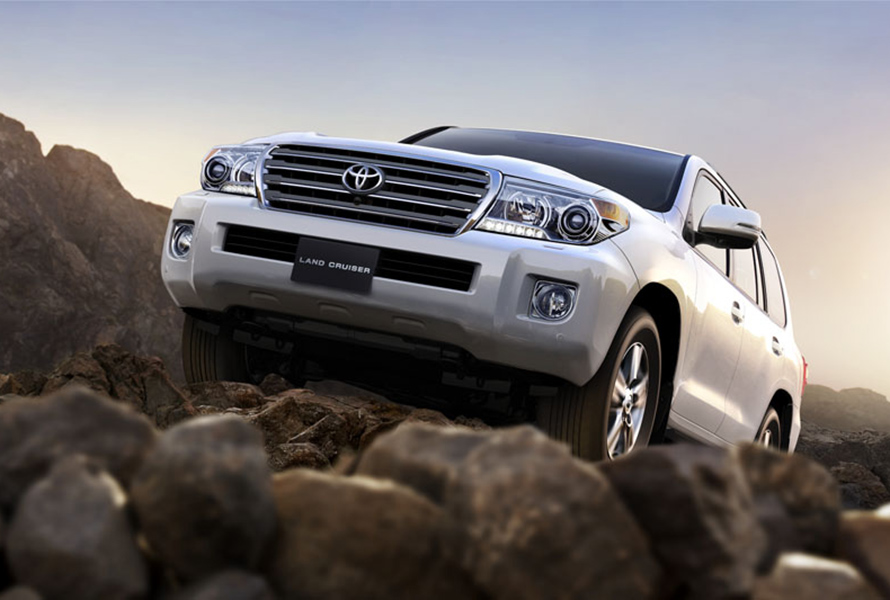
Life’s journey is long, unpredictable and wonderful and Toyota want to help keep it that way by delivering you from experience to experience safely and securely. Decades of motoring knowledge and exhaustive collaborative research ensure that every new Toyota is not only ready for action but can be depended on when you need it most – and even when you think you don’t.
Out of harm’s way
When driving you rely instinctively on three abilities: recognition, judgement and manoeuvring. New Toyotas assist these abilities by helping to keep potentially dangerous situations at bay. These ‘active’ features – including ABS, brake assist, traction control and Toyota Safety Sense – are now a big part of the safety work we do at Toyota, with the ultimate goal being to eliminate traffic accidents altogether and create a safer driving environment for everyone.
Prepared for anything
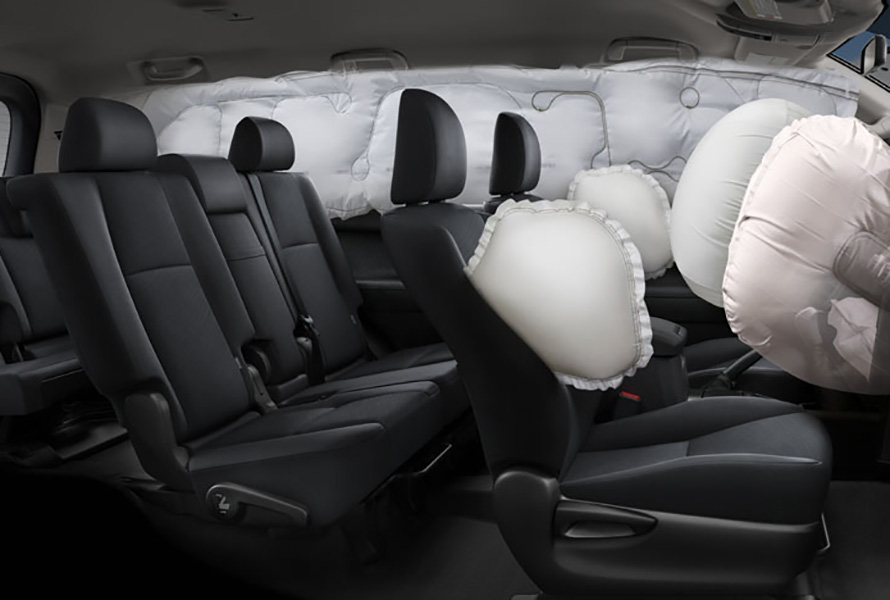
To constantly improve features such as impact-absorbing body structures, occupant cells, airbags, seat belts and whiplash-lessening seats, we recreate collisions from actual accident data, carry out extensive analysis and target the very highest safety results while meeting and exceeding international safety standards and evaluations.
Anti-lock Brake System (ABS)
Helps prevent brakes from locking.
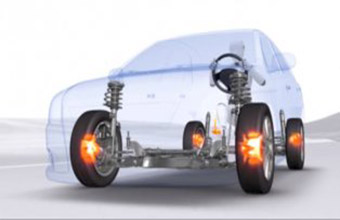
The ABS (Anti-lock Brake System) monitors the speed of each wheel to detect locking. When it detects sudden braking, it will release braking pressure for a moment and then provide optimum braking pressure to each wheel. By repeating this process in a short period of time, it enhances steering control during sudden stops. As a result, it will also help improve the ability of stopping the vehicle.
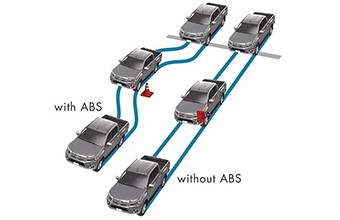
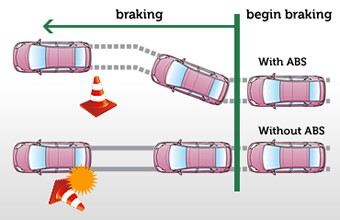
ABS only supports the driver’s control of the vehicle, and it is not a substitute for it. It is the driver’s responsibility to drive at the appropriate speed depending on the condition of the road and to keep a generous distance from the car ahead of you.
Brake Assist
Supports unexpected braking in case of emergency.
Studies show that nearly half of all drivers do not step on the brake quickly and strongly enough to stop the vehicle in case of an emergency.
When Brake Assist detects an attempted panic stop, it supports drivers by strengthening the power.
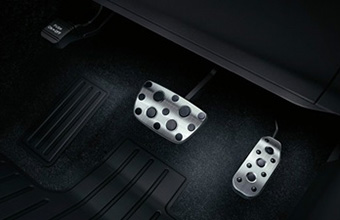
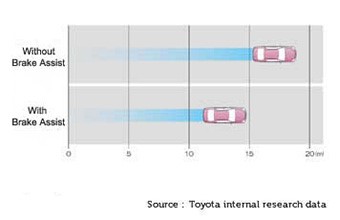
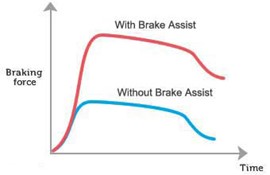
Brake Assist will detect attempted panic braking based on the force that is applied to the brake pedal and how fast the driver is stepping on the pedal. When the system recognizes sudden braking, it will add additional pressure to the brake.
When your foot is released during Braking Assist,braking power lessens and regulates the brakes with ease.
Traction Control (TRC)
Helps prevent wheel slippage when the vehicle is starting or accelerating on wet or slippery roads.
When you are starting the vehicle or accelerating on a wet surface, you could lose control of the wheel because of wheel spin. TRC will help prevent such events from happening.
TRC continually monitors the condition between the tires and the surface of the road.
When it detects wheel spin, the system applies brakes or slows down the engine to regulate spinning and help ensure proper contact of tires. This help prevent the car from becoming unstable.
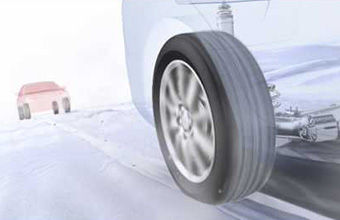
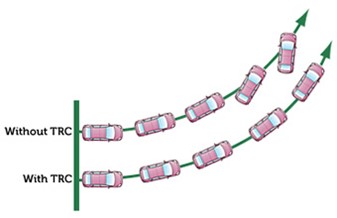
There might be the cases in which the half-side of the wheel runs off or the wheels spin off on the snowy road. And also there might be the case that the current tractino control might not be working well.
In those cases, Auto LSD is one of the technologies which both improve startability and runability.
Vehicle Stability Control (VSC)
Helps prevent wheels from slipping sideways when cornering or sudden steering.
VSC is a system that helps prevent side skids and help stabilize the vehicle while turning on a curve. According to the National Highway Traffic Safety Administration’s (NHTSA) report, vehicles equipped with VSC compared to those without can effectively reduce single-vehicle accidents by 35% for automobiles and 67% for Sport Utility Vehicles (SUV).
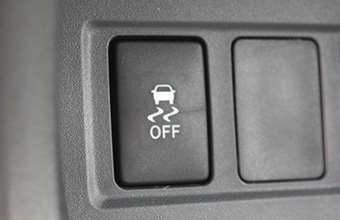
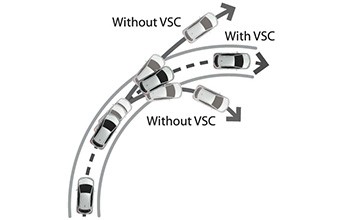
When the vehicle senses a loss of traction or a slip, braking is automatically applied to all 4 individual wheels and engine power is reduced to help secure the safety of the vehicle. For example, if the steering wheel refuses to turn from over-speeding (under-steering), the vehicle will take control to steer toward the inner curve. Also, when the vehicle begins to spin from abrupt steering handling (over-steering), the vehicle will take control to steer toward the outer curve.
*VSC is designed to help the driver maintain vehicle control, and it is not a substitute for safe driving practices. Also, the system will not be able to surpass the performance of the quality of the tires.